Showing posts with label avastin_bevacizumab. Show all posts

Saturday, 18 January 2020

Good news from MRI scan. GBM Tumor shrinkage from 4.5cm to 2cm

Happy New Year everyone. I wanted to give a positive news update as it is great motivation when there only seems to be negative news regarding glioblastoma. My dad had his 3 month MRI scan follow up (since the last scan in September) today and it shows tumor shrinkage from 4.5cm (in addition to swelling) down to 2cm and no swelling. 

What was added since the previous MRI scan (September) was starting these drugs in October:
  • 16 mg dexamethasone and then slowly reducing to 2mg now; 
  • Biweekly IV Bevacizumab - avastin ; 9 rounds completed; 
  • 2g daily Valaciclovir - valtrex (1g in the morning, 1g in the night);
  • 100mg daily Artemisinin;
  • 500mg daily Astragalus. 
I think the Bevacizumab - avastin and Valaciclovir - valtrex really helped.

I want to share his treatment as I know there is no one cocktail list and it can be difficult to know what to take and also where to get the drugs or supplements. We began by taking the list of "A" drugs from the table which Stephen shared with us after I emailed him directly. Stephen also provided a link to the Ben William's and Richard Gerber's cocktail list. Since my dad is unmethylated we tried to follow Richard Gerber's cocktail list as closely as possible. We printed out the BT Cocktail list Stephen shared with us, modified it to the "A" drugs and printed this as my dads list to show his oncologists and GP with the dosage he was taking. We were lucky some friends were able to get chloroquine phosphate, Celebrex and melatonin over the counter in Spain. This meant we could start slowly adding drugs one by one before getting the GP to prescribe these drugs to my dad. His oncologist was happy for my dad to try whatever he wanted once he did the treatment they suggest - he was free to add any supplements or drugs once we provided the oncologist and GP with the cocktail list, dosage, purpose (this info from the cocktail list Stephen shared) and the date we added the drug and only one by one with two weeks apart. For the likes of Valaciclovir - valtrex we named the researchers who carried out the study and the publication and then our GP was happy to prescribe these drugs from our local pharmacy.

We check his drug interactions using drugs.com website. It allows you to enter the list of drugs and says potential side effects or which drug combinations throughout the day to avoid. We also get the pharmacist to make up weekly blister packs and they put his drugs into morning, lunch, evening and night - this service really helps us keep organise. We keep a day example of how the pharmacist previously made up the blister pack and hand that in to the pharmacist the following month so they remember - as even for the pharmacist its alot in the cocktail to remember.

We are attending 2 hospitals because one is a general hospital to deal with his seizures and it is 10 mins drive away and his oncologist/neurologist hospital are 15 mins away from our house - we are very lucky with the excellent healthcare in Ireland and that it is all provided for (consultation, MRI scans, surgery, radiation, chemotherapy, Bevacizumab - Avastin, prescribed cocktail medication, social worker, counselling, hospital stays, blood tests, tumor analysis).

We were taking N-acetylcysteine early on (it is a Glutamate transporter 1 (GLT1)) but we stopped as we read it might enhance the tumor growth - we do not know if it is good or bad to take??? I think the seizure drugs blog glutamate transport?


We also obtained Disulfiram but never added this to our cocktail as we do not know if it interacts with the seizure drugs??


We also were taking Ranitidine (75mg daily) but stopped this after reading about side effects combined with Bevacizumab - avastin. Although my dad never had any issues. 


We are also interested in adding more to the cocktail perhaps similar to the CUSP9rv3 clinical trial cocktail such as ritonavir. We are also continuing to do research on HAART/HIV antriviral treatment as apparently HIV patients in Brazil/Mexico did not get GBM's over a 20 year period. 


My dad needed to take Duclox for constipation during chemo but is fine now.


My dad does not follow a ketogenic diet but we do encourage him to have a vegan diet as much as possible low in sugar. However if he wants to eat biscuits, bread, chocolate etc he does - he loves Latte's and dark mint chocolate. He does not have any alcohol due to the seizure medication.


BACKGROUND:

  • My father was diagnosed with Grade 4 GBM after a grand mal seizure 24th Feb 2019. Located in the left temporal lobe, around 3cm.
  • He had a successful craniotomy on the 7th of March 2019. About 95% removed, at least all visible tumor was removed.
  • He completed the 30 sessions of radiation/310mg TMZ. 17th April 2019 to 30th May 2019
  • He then did 3 months of 5/23 400mg TMZ chemo. July-September 
  • TMZ was stopped and been doing Avastin every 2nd Monday since 23rd September 2019 - today 13th January 2020 still doing.
  • Some notes to point out: he was swimming the evening before he had his 1st seizure. He couldn't finish a pint of guinness that night and had some pins and needles in his right arm before sleep - he had no other symptoms to indicate this tumor before 24th February 2019. He had the seizure in the middle of the night. 7th March Surgery went really well and was chatting away normally 1 hour afterwards. To this day he has never had any pain or headaches. He had no side effects during radiation and chemotherapy apart from the seizure 5 weeks after it finished. 
Side Effects:
  • 30th June 2019: About 5 weeks after 30 sessions radiation/chemo and after having daily tingling, we spent the day walking around the countryside for many hours. We had a 2 hour car journey and he was 2 hours late taking his Keppra (at the time he was only on 1g total in the day, 500mg morning and 500mg evening). That night he had 4 multiple seizures. He came through after the 1st seizure but he seemed to have panicked when he saw the paramedics that he went into the 3 other multiple seizures. The hospital induced him into a coma for 24 hours which we were not expecting. His Keppra dosage was increased to 2.5g a day and they added phenytoin 300mg in the morning. They also restarted him in dexamethasone 2 weeks 4mg and then 2 weeks 2mg.
  • 4th September 2019: He had been having foot twitching since 30th June every night when sleeping. From the end of August he was starting to mix up people's names and words due to aphasia resulting from the edema. Hospital increased the Keppra to 3g per day, added Clobazam 10mg x 2 and 16mg Dexamethasone daily - which we have been reducing since September until now (18th Jan) where he is on 2mg Dexamethasone. His speech has now returned to 100% and no seizures  after adding Phenytoin, Clobazam. There was alot of swelling/looked like the tumor was very active by MRI and due to MGMT unmethylation the hospital stopped the TMZ and have now been giving him Bevacizumab - Avastin on Mondays every 2 weeks, 9 rounds so far.  Bloods are all normal and within range.
  • October 2019: My dad took Zovirax tablets and then switched to Valtrex as it apparently has better bioavailability. For 2 weeks when he started taking this we noticed he broke out in large cystic type spots around his face and neck - it almost looked like his body was trying to get rid of toxins??? These spots went away after about 2 weeks after starting the Acyclovir treatment.


    Daily Routine: He carries around Midazolam injections in case he was ever to have a seizure

    MORNING:


    1. 8.30am: Ensomeprazole 40mg (One tablet a day). Stomach protector for steroid

    After Porridge (with seeds):

    9am: Following medication all prescribed by GP 


    1. Dexamethasone 2mg (One tablet a day). Steroid to reduce swelling
    2. Ramipril 5 mg (One tablet per day). ACE inhibitor, Lower Blood Pressure, Prevents accumulation of Tumor associated Macrophages) 
    3. Phenytoin - Epanutin 300 mg - (3 x 100 mg tablets all taken at this time. Anti-seizure
    4. Clobasam - Frisium 10 mg (twice a day, 10 mg in morning, 10 mg at night) Anti-seizure
    5. Levetiracetam - Keppra 500mg x 3 (twice a day, 1.5g in morning, 1.5g at night) Anti-seizure
    6. Metformin Hydrochloride 500 mg (twice a day, 500mg in morning, 500mg at night). Diabetes and Immune booster
    7. Valaciclovir - Valtrex 500mg x 2 (twice a day, 1g in morning, 1g at night) Anti-viral, HSV, VZV, EBV, CMV. Guanosine binds to cancer cell DNA and converted by viral thymidine kinase and host cell kinases to aciclovir triphosphate (ACV-TP)
    8. Chloroquine phosphate - Avloclor 250 mg. (One tablet per day, 155mg active chloroquine base). Malaria. Inhibition of late-stage autophagy
    9. Minocyline 100 mg (twice a day, 100mg morning, 100mg evening - one month on and switch one month off to use Mebendazole instead). Targets macrophage/microglia. Anti-seizure
    10. Mebendazole Vermox 100 mg (twice a day, 100mg morning, 100mg evening - one month on and switch one month off to use Minocycline instead). 


      After omelette (with garlic):
      10.00am: Supplements. Mainly obtained from iherb apart from Turkey tail which is difficult to get in Ireland and we get via evitamins.

      1. Boswellia NOW 500mg tablet. (1 of 3 tablets per day) Reduces edema
      2. ECG (green tea extract) . Now 400 mg. Sensitizer to TMZ by GRP78 inhibition
      3. Maitake D Mushroom Wisdom (600 mg tablets – 1 tablet per day). Immune
      4. Curcumin. Doctor's Best (1000mg tablets – 1 tablet once per day but give other brands of Curcumin later in the day as this is not Longvida and difficult to swallow) Immune; STAT3 inhibitor
      5. Multivitamins. Optimum Nutrition, Opti-Men. (1 tablet once per day)
      6. Vitamin D3.  NOW (10,000 IU tablets – 1 tablet once per day). Cell differentiation; Immune
      7. Mushroom supplement mix from Fungi Perfecti Host Defense Stamets 7 (Royal Sun Blazei; Cordyceps; lions mane; Maitake; reishi; Chaga; Mesima); Immune
      8. Artemisinin. Doctor's Best (100mg tablets – 1 tablet once per day) Malaria and Direct Cytotoxicity, apoptosis


      LUNCH:
      After snack:
      1pm: Medication prescribed by GP 

      1. Celecoxib - Celebrex (200mg tablet) Arthritis and COX-2 inhibitor, Immune (PGE2 inhibition),  reduces edema


        1pm Supplements:

        1. Astragalus NOW (500mg tablet) Immune


        TEA: (meal followed by a glass of Kombucha or Kefir)
        After snack:
        5pm:

        1. Omega 3-6-9  Now Foods, 1200 mg - 1 tablet per day) From Borage, Flax Seed & Fish Oils Increased oxidative stress in tumor cells
        2. Milk Thistle, Silymarin Now Foods, (300 mg tablet) Immune and liver support
        3. Berberine Natural Factors, WellBetX (500 mg tablet).Glucose metabolism and Induces senescence of  cells by down regulating the EGFR-MEK-ERK signalling pathway
        4. Boswellia NOW 500mg tablet. (2 of 3 tablets per day) Reduces edema
        5. Curcumin. Protocol for Life Balance, Curcumin SLCP Longvida 400 mg and  Advanced Orthomolecular Research (AOR) Curcuviva 400 mg (80 mg curcuminoids and Nordic Naturals Curcumin Gummies Mango 200mg Longvida. Prefers the Nordic Naturals gummies. Immune; STAT3 inhibitor

        EVENING:
        9pm: Medication prescribed by GP 

        1. Clobasam - Frisium 10 mg (twice a day, 10 mg in morning, 10 mg at night) Anti-seizure
        2. Levetiracetam - Keppra 500mg x 3 (twice a day, 1.5g in morning, 1.5g at night) Anti-seizure
        3. Metformin Hydrochloride 500 mg (twice a day, 500mg in morning, 500mg at night). Diabetes and Immune booster
        4. Valaciclovir - Valtrex 500mg x 2 (twice a day, 1g in morning, 1g at night) Anti-viral, HSV, VZV, EBV, CMV. Guanosine binds to cancer cell DNA and converted by viral thymidine kinase and host cell kinases to aciclovir triphosphate (ACV-TP)
        5. Atorvastatin 20 mg (1 tablet a day) Manage Cholesterol
        6. Minocyline 100 mg (twice a day, 100mg morning, 100mg evening - one month on and switch one month off to use Mebendazole instead). Targets macrophage/microglia. Anti-seizure
        7. Mebendazole Vermox 100 mg (twice a day, 100mg morning, 100mg evening - one month on and switch one month off to use Minocycline instead). 

        9pm Supplements:

        1. Resveratrol Now Foods, 200 mg,
        2. Soy Isoflavones with Vitamin B6. Holland and Barrett Contains active daidzin, genistin and other isoflavones, phyto-oestrogens
        3. PSK or PSP (Turkey Tail Mushroom/Corilus versicolor/Trametes versicolor) NFH Hot-Water extract Immune 500mg (obtained from Walmart) have backup from evitamins from Mushroom Wisdom. 
        4. Probiotics; Garden of Life, Dr. Formulated Probiotics, Mood+ ( 1 tablet once per day); 16 strains  50 Billion CFU¹ (203 mg)
        5. Boswellia NOW 500mg tablet. (3 of 3 tablets per day) Reduces edema
        6. Spirulina powder mixed in with green juice

          NIGHT:
          11pm: Medication prescribed by GP

          1. Melatonin 20mg; 


          Useful links we used:

          Ben William's cocktail: https://btcocktails.blogspot.com/2015/08/ben-williams-cocktail-profile.html

          Richard Gerber's MGMT unmethylated cocktail: https://btcocktails.blogspot.com/2015/10/rich-cocktail.html

          CUSP9rv3 Cocktail list (Neurology consultant DR. Marc-Eric Halatsch) https://clinicaltrials.gov/ct2/show/NCT02770378

          Positive correlation between HIV antiviral treatment and low occurrence of glioblastoma https://www.researchgate.net/publication/266011045_Gliomas_and_brain_lymphomas_in_HIV-1AIDS_patients_reflections_from_a_20-year_follow_up_in_Mexico_and_Brazil

          https://virtualtrials.com/survive.cfm

          https://virtualtrials.com/noteworth.cfm

          http://www.anticanceralliance.com/cusp-nd/

          https://www.survivingterminalcancer.com/

          https://clinicaltrials.gov/ct2/show/NCT02770378

          https://www.frontiersin.org/articles/10.3389/fphar.2018.00218/full

          https://www.canceractive.com/article/repurposing-old-off-patent-drugs-as-new-and-effective-cancer-treatments

            Monday, 23 September 2019

            Avastin alone?

            Further to a recent previous post.

            3 months of TMZ 5/23 showed that chemo is not working for unmethylated GBM. The tumor is very active according to MRI comparison between July and September 2019. There was alot of swelling which is currently being reduced with 16 mg steroids per day in the past week. Speech has improved alot with this. Was told it is too close to previous radiation or surgery to have either done again.

            2 weeks ago clonazepam was prescribed 10mg x 2 and Keppra increased to 1500mg x 2 and Phenytoin 300mg in the morning -  all of this is keeping seizures, twitches and focal seizures away.

            Oncologist is going to start IV Avastin today and stop all treatment - asked if it was pallatiative but answer no it is not pallatiative treatment yet. Thought it was unusual to go ahead with Avastin by itself and not combine it with another chemo treatment such as lomustine?

            Have been following cocktail since during radiation treatment back in April 2019 which I posted about in previous post. This includes daily chloroquine (155mg active ingredient); celebrex 200mg; metformin 500mg x 2; Atorvastatin; ramipril; ranitidine 75 mg; mebendazole; melatonin 20mg.

            Also the usual daily supplements of mulitvitamin; 16 strain Probiotics; PSK; Maitake D; ; Mushroom supplement mix for brain (lions mane 300mg; bacopa 250 mg; reishi 150 mg; gotu kola 130 mg; ginko 120 mg); curcumin (longvida); vitamin D; ECG; Milk Thistle; Berberine; Boswellia; Resveratrol; Omega 3-6-9; Soy Falvonoids (geinistein)

            Wondering if anyone has any experience of just Avastin being prescribed? I am wondering what is even the point in doing avastin alone? Appears to have more side effects and very little extra benefits, or OS? I was optimistic that Richard Geiber had Avastin and low dose TMZ but that doesnt seem to be on offer to us? Or any chemo alternative?

            Very disappointing TMZ stupps protocol + cocktail did not seem to work. 


            Friday, 12 October 2018

            Bevacizumab: Is the lower the better for glioblastoma patients in progression?

            A very interesting study confirming previous reports on the possibility of using low doses of bevacizumab. A dose of 1 mg / kg / 2 weeks looks very strange. However, to the surprise, the authors report a similar effect with other doses and less toxicity! Your opinion?


            METHODS:

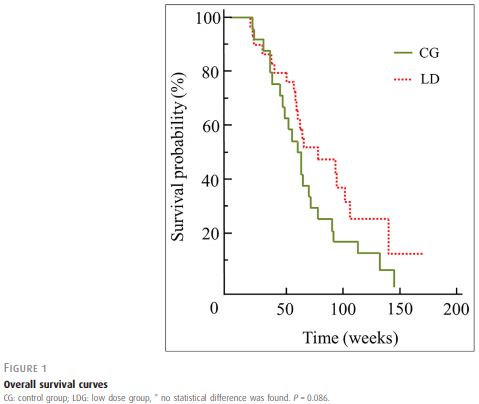
            From September 2013 to August 2016, we recruited patients with progressive glioblastoma, whatever the previous treatments. We compared a routine control group (CG) of ten mg/kg, to a low dose group (LDG) composed of 5 subgroups: G5: five mg/kg, G4: four mg/kg, G3: three mg/kg, G2: two mg/kg, G1: one mg/kg; each patient was treated with the same dose every two weeks.

            RESULTS:

            Fifty-three patients were treated: 20 women and 33 men, 24 in the CG and 29 in the LDG. The median age at diagnosis was 62 years [35.0-77.0]. No statistical difference was found in overall survival either for the CG or the LDG (P=0.086) or among groups (P=0.251), with even a trend toward improvement for LDG: 62 weeks [20-145] versus 73 weeks [18-178]. The median progression free survival was comparable: 19.5 weeks [6.0-54.0] for the CG and 15.0 weeks [0.0-134.0] for the LDG (P=0.221). Bevacizumab was stopped either due to progression (45.1%) or toxicity (52.9%), without significant differences between doses but maybe less toxicities in the LDG (16.7% for toxicity in G1).

            DISCUSSION:

            Use of bevacizumab at progression at lower than usual doses seems to give the same results as the standard dose without giving additional toxicity.

            Tuesday, 9 October 2018

            Celebrex post-Avastin?

            Hi all,

            My brother received his first Avastin treatments over the past few months and suffered a brain bleed. After he was stabilized, his NO said we needed to take a break from Avastin and re-evaluate after 1 month. James was also on Xarelto during this Avastin treatment due to a blood clot that formed in his leg. He is no longer taking Xarelto.

            James desperately wants to get off of steroids and is beginning to dose down. He's previously done OK dosing down slowly, but I wanted to ask about introducing Celebrex.

            I'm concerned that maybe it could be a bad idea due to the brain bleed? The bleed has not fully "absorbed" so it is still present, though it is under control.

            Any previous experiences or references would be greatly appreciated.

            Thanks!

            Thursday, 6 September 2018

            Bevacizumab and re-irradiation for recurrent GBM

            2018 Sep 4. https://www.ncbi.nlm.nih.gov/pubmed/30182159

            Full article:
            http://sci-hub.tw/http://link.springer.com/10.1007/s11060-018-2989-z

            PURPOSE/OBJECTIVES:
            We report the outcomes of the largest cohort to date of patients receiving both bevacizumab (BEV) and fractionated stereotactic radiotherapy (FSRT) for progressive or recurrent high grade glioma (HGG). Furthermore, the sequence of these two treatment regimens was analyzed to determine an optimal treatment paradigm for recurrent HGG.

            RESULTS:
            A total of 118 patients with recurrent/progressive HGG (GBM = 87, AA = 31) had received both BEV and FSRT (fractionated stereotactic radiotherapy). Patient characteristics were as follows: median KPS at recurrence was 80 (range 50-100); median age at recurrence was 57 years; median time to radiographic recurrence/progression was 10.8 months (mo) and 33.1% of patients had surgery for recurrence. The median time from the start of BEV to FSRT was 6.4 months and from FSRT to the start of BEV was 5.1 months.

            For the entire cohort, median overall survival (OS) was 26.7 months and median survival time (MST) from recurrence was 13.8 months (24.4 months and 11.9 months for GBM only).

            In patients that received BEV prior to FSRT (n = 50), median OS and MST from recurrence were 25.2 and 13.3 months respectively.

            In patients receiving FSRT first (n = 56), median OS and MST from recurrence were 28.8 months and 13.9 months, respectively.

            Sequencing of BEV and FSRT at recurrence was not significantly associated with OS (p = 0.08) or median survival from recurrence (p = 0.75).


            CONCLUSIONS:
            The combination of FSRT and BEV for recurrent/progressive HGG provides promising results in terms of overall survival and survival from recurrence. Combining these treatment modalities appears to improve upon the historic outcomes of either treatment alone. The outcomes data from this study support the ongoing RTOG trial exploring the combination of BEV and FSRT for recurrent HGG.

            The gross tumor volume (GTV) was defined as peripherally enhancing tissue on T1 post-contrast MRI. Surrounding edema was not purposely included in the treatment volume. The planning target volume (PTV) was the GTV with no margin. The PTV was treated to a median dose of 35 Gy delivered in 10 fractions (Supplemental Fig. 1). The constraints for normal critical structures include: brainstem max dose<30 Gy; optic nerve max dose<25 Gy, chiasm max dose<25 Gy for patients previously irradiated near critical structures and max doses less than 35 Gy for patients not previously irradiated near critical organs at risk.


            Thursday, 8 February 2018

            Do statins, ACE inhibitors or sartans improve outcome in primary glioblastoma?

            This is a new paper (click here for abstract) brought to us by some of the same authors who earlier produced:

            Does Valproic Acid or Levetiracetam Improve Survival in Glioblastoma? A Pooled Analysis of Prospective Clinical Trials in Newly Diagnosed Glioblastoma

            The group concluded:

            "This secondary analysis of two large glioblastoma trials thus was unable to detect evidence for an association of the use of statins, ACEI or sartans with outcome in patients with newly diagnosed glioblastoma."

            As with the previous study, there are some important caveats.  Some of the most intriguing data supporting the potential for angiotensin system blockers was in combination with bevacizumab:

            Effect of angiotensin system inhibitors on survival in newly diagnosed glioma patients and recurrent glioblastoma patients receiving chemotherapy and/or bevacizumab

            It would have been interesting to look at outcomes in those using/not using ACE inhibitors or sartans in combination with bevacizumab, for example in the Avaglio and RTOG-0825 trials.

            Angiotensin-II has been shown to increase tumor-promoting macrophages in preclinical models:

            https://www.ncbi.nlm.nih.gov/pubmed/23333075

            and these tumor-infiltrating myeloid cells may play a significant role in resistance to anti-VEGF therapies such as bevacizumab.

            https://www.ncbi.nlm.nih.gov/pubmed/26404753


            Saturday, 27 January 2018

            Intraarterial bevacizumab

            I found information about the intra-arterial administration of bevacizumab. It looks very interesting.
            Does anyone know any details?

            Long-term benefit of intra-arterial bevacizumab for recurrent glioblastoma.
            2017 https://www.ncbi.nlm.nih.gov/pubmed/28472567
            "Standard treatment for recurrent GBM is not yet established. We present a case demonstrating the benefit of intra-arterial (IA) bevacizumab with blood brain barrier disruption (BBBD) for the treatment of recurrent GBM. A 31 year-old man diagnosed with GBM, following primary resection, received temozolomide. After a second resection, he received one dose of IA bevacizumab with BBBD using mannitol, preventing regrowth for 2.5 years. Following tumor regrowth, the patient received another dose of IA bevacizumab with BBBD, which has prevented regrowth for another year."

            2012 https://www.ncbi.nlm.nih.gov/pubmed/22946342
            Intra-arterial bevacizumab with blood brain barrier disruption in a glioblastoma xenograft model.

            Mannitol was used to prepare the solution:
            https://www.drugs.com/monograph/mannitol.html

            The practice of such treatment in Ukraine:
            2013 https://cyberleninka.ru/article/n/ispolzovanie-metoda-vnutriarterialnogo-vvedeniya-himiopreparatov-v-sostave-kompleksnogo-lecheniya-patsientov-s-gliomami-golovnogo
            For the intra-arterial administration of drugs, the endovascular technique was used.
            "It was found that the method of intra-arterial delivery of chemotherapy is effective and efficient in treatment of patients with malignant gliomas of the brain, can reduce the toxic effects of chemotherapy on the patient, to improve the quality of life for patients."


            Thursday, 11 January 2018

            Avastin + Irinotecan?

            It seems that my mother's tumor (MGMT methylated) did not decrease after radiation therapy + TMZ.
            Doctors offer a combination Avastin + Irinotecan.
            They say that if TMZ did not help by the time of radiotherapy, then TMZ will not even help with Lomustin!

            But I have not seen a single message on this blog about Avastin + Irinotecan combination!
            If we use it, what drugs do you recommend adding to increase efficiency?

            Sunday, 10 September 2017

            GBM possible recurrence help

            Hi all, my brother diagnosed with gbm last year april 2016 and got his surgery, radiation and temodal immediately after that. This year around feb 2017 during his 3months mri checkup the doctor noted a 0.75cm mass suspected as gbm. Bc its too small the doctor decided to wait for next mri to see how it goes. At may 2017 my bro undergo another mri and found out it was clear! But at next mri aug 2017 they found the 'dissapeared' mass to have grown to 1.4cm. The doctor have decided that it must be gbm recurrence, and he said that the missing mass in between these mri must be the gbm 'hiding'. Is it really possible gbm to be 'missed' during mri?

            And we also really confused to the best solution in handling this 'possible gbm recurrence'. We have asked diff doctors including neurosurgeons and oncologists. Doctor A said we should go with gamma knife, Doctor B said we should go with Surgery instead cause Gamma knife wont guaranteed as clear as Surgery. Doctor C said Surgery is dangerous cause the mass is in a critical location that can 'paralyzed', and Gamma knife not effective so we should go with Cyberknife instead. Anyone who have experienced gamma or cyber which one is actually more effective for gbm? And for gamma knife do the patient need to undergo chemotherapy after the gamma knife operation like using Avastin? Or they can only wait for the gamma to works? We really appreacite any recommendations or sharing of experience. Thank you!

            Regards,
            Milee

            Saturday, 5 August 2017

            Angiotensin system inhibitors + low dose Avastin

            This June a study was published by Victor Levin et al. of Kaiser Permanente Hospital, Redwood City, which follows up on a previous study on the use of Avastin doses lower than the standard dose.

            https://www.ncbi.nlm.nih.gov/pubmed/28631191  (I've uploaded the full study to the Brain Tumor Library -> Folder 1. Therapies - Human Studies -> Angiotensin System Inhibitors)

            The current study looked at the use of angiotensin system inhibitors, including both ACE inhibitors (benzapril, captopril, etc.) and angiotensin II receptor blockers (losartan, telmisartan, etc.) used for hypertension simultaneously with chemotherapy and/or Avastin in newly diagnosed and recurrent glioma patients.

            In a very large cohort of 1186 infiltrative glioma cases (grades 2-4), use of an angiotensin system inhibitor (ASI) was significantly associated with better survival (hazard ratio 0.82), in a multivariate analysis adjusted for other variables such as age, extent of resection, GBM versus other grade, use of Avastin, etc.  This advantage of ASI treatment was even more significant in patients who were also treated with Avastin (HR 0.75).

            A previously published cohort of 181 recurrent GBM patients treated with various doses of Avastin was examined with regard to their use of ASI drugs (for hypertension).  The previous study had shown trend toward longer survival in the group treated with lower-dose Avastin, and this study has been summarized elsewhere.
            http://virtualtrials.com/pdf2016/benwilliamsTreatmentOptionsUpdate2016.pdf   (Page 90)

            Remarkably, of the 89 patients treated with doses of Avastin lower than 3.6 mg/kg/week (the standard dose amounts to 5 mg/kg/week),  the 47 patients also using an ASI drug had a very impressive median survival of 99 weeks (22.8 months) versus 55.6 months (12.8 months) for the 42 patients receiving low dose Avastin without ASI drugs.


            99 week (nearly 23 month) median survival (from treatment for recurrence) for a sizeable (n=47) group of recurrent glioblastoma patients in virtually unheard of.  Although all the usual caveats apply because of the retrospective, non-randomized nature of this study,  the outcomes are too impressive to ignore.

            As Levin et al. conclude "Prospective clinical trials combining ASIs with low-dose BEV in GBM patients are now needed to confirm whether ASIs can enhance the efficacy of VEGF-targeted therapies and thereby improve clinical outcome."

            As a side note, Victor Levin is the founder of the Society for Neuro-Oncology (SNO) and often described as the "father of neuro-oncology", at least in America.


            Sunday, 2 July 2017

            Avastin Fatigue sideffects

            Hello, my husband's last MRI following his 2nd round of adjuvant TMZ showed his right temporal lobe gbm increased in size by 50% as well as a new tumor on left side on anterior horn of left lateral ventricle. Our NO recommended Avastin
            only at 1/2 dose, so we had first infusion on June 5th then another on June 19th.  My husband has declined significantly mentally and physically since then. He is sleeping 20-22 hrs a day, and today his legs seemed to give out on him and it took my son and I several hours to get him back into bed bc of confusion he wouldn't trust us or let us help him. It was heartbreaking. Our NO is saying it will take 2 more treatments to see if it is working....does this sound right?  He is suppose to get 3rd infusion tomorrow, but I don't even know if I will physically be able to get him there, so that may be answer in itself. I just want to know I did all I could. Do you all think if he was going to respond he would've done so by now or shown some improvement? Thank you for your help.

            Wednesday, 31 May 2017

            Best ways to maximize Avastin efficacy

            I have searched BTCocktails and Astrocytoma Options to come up with a list of supplements and drugs that may make Avastin more effective. This is what I found:

            - Chloroquine.

            - DCA.

            - CBD.

            - Honokiol.

            Does anyone have any other suggestions or is that it?

            Friday, 14 April 2017

            On Avastin/TMZ, but looking to future - Abemaciclib potential or DCVax-L/nivolumab therapy

            Hi all,

            My Dad's story/timeline/cocktail can be seen here:
            http://btcocktails.blogspot.com/2017/02/tom-wangerin-cocktail-profile-and.html

            He is MGMT methylated, not IDH1 mutated, positive for 1p Deletion, and after recently receiving our genetic testing Foundation One report back (which was completely covered by our insurance!!) shows a "CDKN2A/B loss" - which leads me to my next few topics


            • We completed standard chemo-radiation in January 2017 (radiation caused inflammation that has us struggling to get him lower than 4mg/day decadron).
            • Has finished (3) rounds of TMZ since.
            • His latest Image (March 2017) showed increased inflammation to the point where our NO at UCSF could not really see much, but it was clear the TMZ was not decreasing the tumor size.
            • A week ago on April 4th 2017 - My dad received his first Avastin infusion. The thought here is to use the Avastin in short term bursts to not only help with inflammation (lowering decadron dosage), but also clearing up the image for the NO to make a better gameplan moving forward. I want to make sure we are not going to stay on Avastin long enough for the tumor to find new pathways (become "immune") as you see happens so often. Any thoughts on this stradegy?
            • Our next image/consultation at UCSF is in a week (4/17/17) to see whether the Avastin infusion made a difference.
            Moving Forward

            Option 1 - Is anyone familiar with Abemaciclib? I haven't seen any posts on here about this CDK4/CDK6 inhibitor. I bring this up because our NO was surprised to see our Foundation One report mention his "CDKN2A/B loss". He immediately mentioned Abemaciclib and is looking at potential trials or best case getting it off-label in some way or another.

            This drug seems to be used more often in breast cancer, but has not shown any spectacular results as far as I can find. Any thoughts?

            Option 2 - DCVax-L/nivolumab therapy - Until the last time we met with our NO this was by far our most exciting find. This Phase II trial is soon to be recruiting out of UCLA 

            (https://clinicaltrials.gov/ct2/show/NCT03014804?term=immunotherapy+OR+dendritic&cond=glioblastoma+recurrent&state1=NA%3AUS%3ACA&state2=NA%3AUS%3AWA&state3=NA%3AUS%3AOR&rank=1)

            DCVax has been spoken about on this forum and appears to be showing better results (and more overall information out there than Abemaciclib). Here are the scary parts of the trial:
            • Our NO has said that he has been finding an overwhelming amount of his patients have serious side effect issues with Nivolumab (inflammation being one of them) and he has seen many end there usage. I did find this odd because many on this forum have spoken about it without the negative connotation.
            • To be included in this trial my Dad must get below 2mg/day of steroid use, which I'm worried might not be possible. 
            • He would need to have a recurrence and it would need to be operable which is scary in itself.... meaning all the stars will need to align for us to get accepted.
            Let me know if the community out there has any opinions of our potential options and usage of Avastin.

            Thank you all for reading and contributing. 

            Ari Wangerin
            (Oakland, California)


            Wednesday, 29 March 2017

            Nivolumab Opdivo infusion and increased seizures?

            I was going to ask a question in this post but decided to start a new one instead.

            Here's our latest situation:

            • My wife has been on Optune for the past seven months, averaging about 69% monthly compliance (two months were 0, the rest were above 85%).
            • We started nivo 11 weeks ago.
            • Prior to starting her first infusion, there was a new growth, which prompted the nivo in the first place.
            • After the third infusion, there was a second new growth.
            • My wife just had her fifth nivo infusion this past Monday, March 27th.
            • Today, Wednesday, March 28th, she had two light focal seizures - she was conscious the entire time.
            • Note that we are not on Avastin nor or Dexa as she doesn't have enough edema to warrant it; at least according to her last two MRIs.


            My question:

            Are increased seizures a common occurrence when using nivo?

            I've not been able to find anything very compelling on the topic.

            Tuesday, 28 February 2017

            avastin

            dear all, does anyone happen to have a link to the study that Avastin  helps in the short term but causes satellite tumors? Thanks!

            Tuesday, 21 February 2017

            Avastin & Lomustine Combo

            We are considering adding Lomustine to Avastin for recurrent GBM.

            Does anyone have experience with this regimen?

            Thank you!

            Thursday, 8 December 2016

            Going off Avastin, considering Optune


            Sorry for the delay in replying about the Avastin causing more tumors.  For some reason, I can't get that posting to accept this reply to SteveMPFP so I'll start a new thread.   First, an update...

            I've decided to go off of chemo until Jan 7. The Avastin was making me have chemo brain and neuropathy and I decided I simply don't want to live that way. Plus, this recent information out about Avastin promoting the formation of new, "satellite" tumors really hit home. While I was pleased that the Avastin took care of my swelling, I did, indeed, get a new tumor while on it. I told my new NO that we have never really given the supplements, especially the CO (cannabis oils), a fair chance because I've always been on a chemo at the same time. Avastin, for example, somewhat shuts down the blood brain barrier as these publications attest. He agreed I could give the supplements and CO a fair shot. It's a bit scary.

            He wants me to consider Optune, the non-chemical therapy that sends electrical fields into the brain. For those who are new to this, these fields interrupt cell division by forcing the cells' microtubule subunits to align to the electrical grid and since it's only tumor cells that are dividing, the normal brain cells are unaffected, so the theory goes. I have already started the process of getting approved.

            But a thought occurs...would Optune not also interfere with supplements? If they cross the blood brain barrier in any sort of a polar form, with any sort of an ionic bent or even an R-group that is even slightly positive or negative, wouldn't the molecules' conformation be affected by an electrical field just like the cells' microtubules are? Your thoughts?

            Friday, 2 December 2016

            Avastin Aids in the Formation of Satellite Tumors?

            This just in from Uncle Ronnie's moonshot program:  https://www.sciencedaily.com/releases/2016/11/161117134353.htm

            I have had a new tumor form, still small thankfully, since going on Avastin.  The research is still preliminary but if it turns out to be correct, this would obviously be very disturbing.

            I am curious...how many of you have had the same thing happen?

            Thursday, 10 November 2016

            Update Post Avastin, 18 months post diagnosis

            My husband, diagnosed May 2015, with inoperable tumor in his right frontal lobe, had the usual radiation/temodar protocol, post radiation chemo only four months. Important to note; 60% of his brain was radiated because of the placement of the tumor(s). After much urging from his UCLA neuro-onc, he had four infusions of Avastin, starting end of August 2016. The results were not what we had hoped, he got weaker after each infusion, to the point that he was back in his wheelchair after being ambulatory post shunt in early July. He is just now clawing his way back from the effects of Avastin, which also include fatigue, and fogginess. It is too soon to tell if Avastin will have any beneficial effects for him. His post Avastin MRI showed a sizable reduction of his tumor and much less inflammation. It also showed possible necrosis.  Two weeks ago he had a major seizure, his neuro-onc can't explain it. I also asked my husband's neuro-onc if he was experiencing aphasia and her response said no, that the EEG showed a slowness of the brain. I'm not sure what that means.  I asked if conflating thoughts, ideas, imagining experiences that didn't occur, word confusion be defined as slowness? And doesn't an EEG just map one moment of time? Would the results of an EEG be different without medication, morning vs afternoon, etc? I need help understanding and also to set my expectations on remapping and what I thought was a pliable brain.  I thought these symptoms would have been a left temporal lobe issues, not right. Does anyone have a similar experience to share?
            BTW, his tumor is MGMT methylated and IDH1 non-mutated.